Cheng's U.S. Visit will Address Cross-Strait Peace
United Daily News Opinion, May 29, 2026
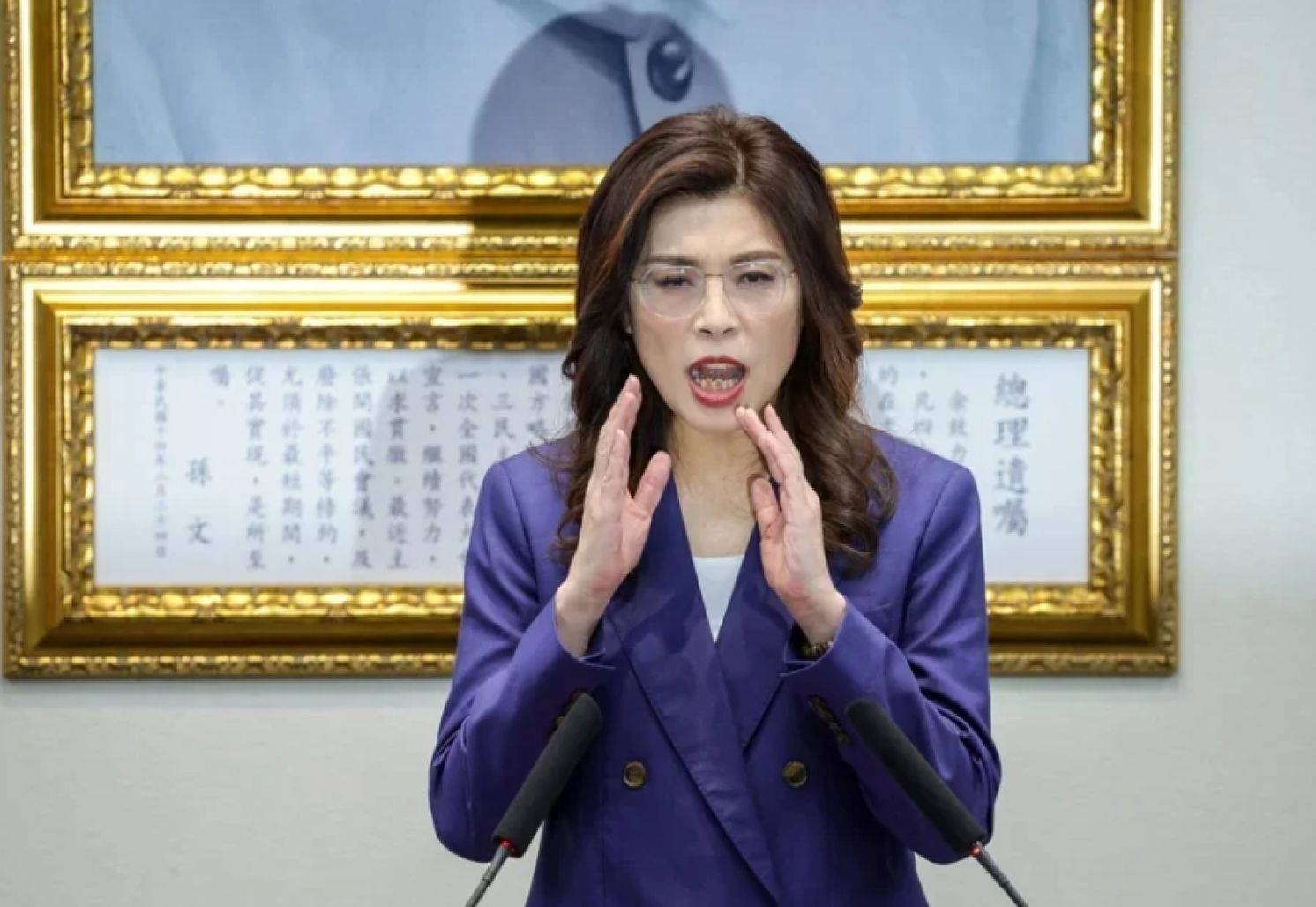
Chairwoman Cheng Li-wun of the Kuomintang (KMT) will depart for the United States on June 1, and this may prove to be a highly challenging trip. The reason is that there is a gap between “what she wants to discuss” and “what realistically needs to be discussed.” Since April, she has repeatedly declared that Taiwan should play the role of a force for peace. On May 23, she further proposed “normalizing peace across the Taiwan Strait” as the central theme of her U.S. visit, continuing the concept of Taiwan serving as a bridge in the Pacific’s “greater cross-strait” framework. However, within U.S. policy circles today, how many people are actually willing to listen? Nevertheless, there are still aspects of Cheng’s visit that warrant anticipation.
First, regarding her advantages during her U.S. visit, Chairwoman Cheng is a newly rising leader within the KMT, and many of her political moves since taking office have demonstrated considerable influence. There are likely many people in the United States interested in her. Given Cheng’s political sensitivity, she surely understands what the Americans want to hear. What is particularly distinctive about Cheng is that the ideological spectrum she occupies within the party tends to pay relatively less attention to the United States. Although Communist China has always described cross-strait issues as domestic affairs, it nevertheless cannot avoid discussing cross-strait matters with the United States. Cheng’s willingness to take this step can not only broaden her own perspective and political standing, but also allow her to further develop her discourse in the future. Whether with Beijing or Washington, she may have room to demonstrate political flexibility.
However, the central theme of Chairwoman Cheng’s trip does not fully align with the role the United States currently hopes Taiwan will play. Although the summit between U.S. and Chinese leaders recalibrated U.S.-China interaction into a relationship characterized by both competition and cooperation, that is not the same thing as how the United States intends to position Taiwan. Even though U.S. President Donald Trump, in a post-summit interview with Fox News, made remarks such as “not wanting to see Taiwan independence,” placing significant pressure on the Lai administration, the tone within Washington’s policymaking circles and Congress still largely remains within the existing framework. Cheng may wish to direct part of her attention toward America’s “China experts,” who may be more likely to resonate with some of her ideas.
From the perspective of structural realism and the recent comparison of U.S.-China national power, it is easy to understand why the United States appears so “divided.” Although the primary theme of Chairwoman Cheng’s visit is peace, Taiwan can hardly avoid issues such as arms procurement and supply chain alignment. To borrow the wording of Cheng’s own team, the challenge of this trip is how to persuade the United States that prosperity alongside mainland China benefits Taiwan” is also in American interests. Director Raymond Greene of the American Institute in Taiwan (AIT) reminded Cheng that she would inevitably be asked in the United States whether the KMT has changed its position. How Cheng answers in a way that satisfies American elites will be a major challenge.
In addition, one wonders whether Chairwoman Cheng has sought advice from KMT figures experienced in U.S.-Taiwan relations. Just the other day, Director Greene cited the story of founding fathers Thomas Jefferson and John Adams, emphasizing that even bitter political rivals can reconcile for the sake of their country. For Taiwan, this is in fact deeply ironic. Greene’s remarks not only highlighted the narrow-mindedness of Taiwan’s current rulers, but also served as a reminder to opposition party leaders.
The public should welcome and wish Chairwoman Cheng success on her U.S. trip. Beyond the fact that “talking about peace” reflects the aspirations of the overwhelming majority of people, arms procurement budgets amounting to hundreds of billions or even trillions are ultimately funded by taxpayers’ hard-earned money. Yet Cheng has not feared being labeled a “communist sympathizer” or “anti-American,” and has persisted in overseeing military procurement budgets. Although this will expose her to doubts and challenges in the United States, it may also help Taiwanese society think more seriously about arms procurement issues and reject the use of national security as a pretext for advancing partisan interests. Taiwan’s public opinion should encourage political leaders who have the courage to adopt new ways of thinking and seek solutions for cross-strait peace.